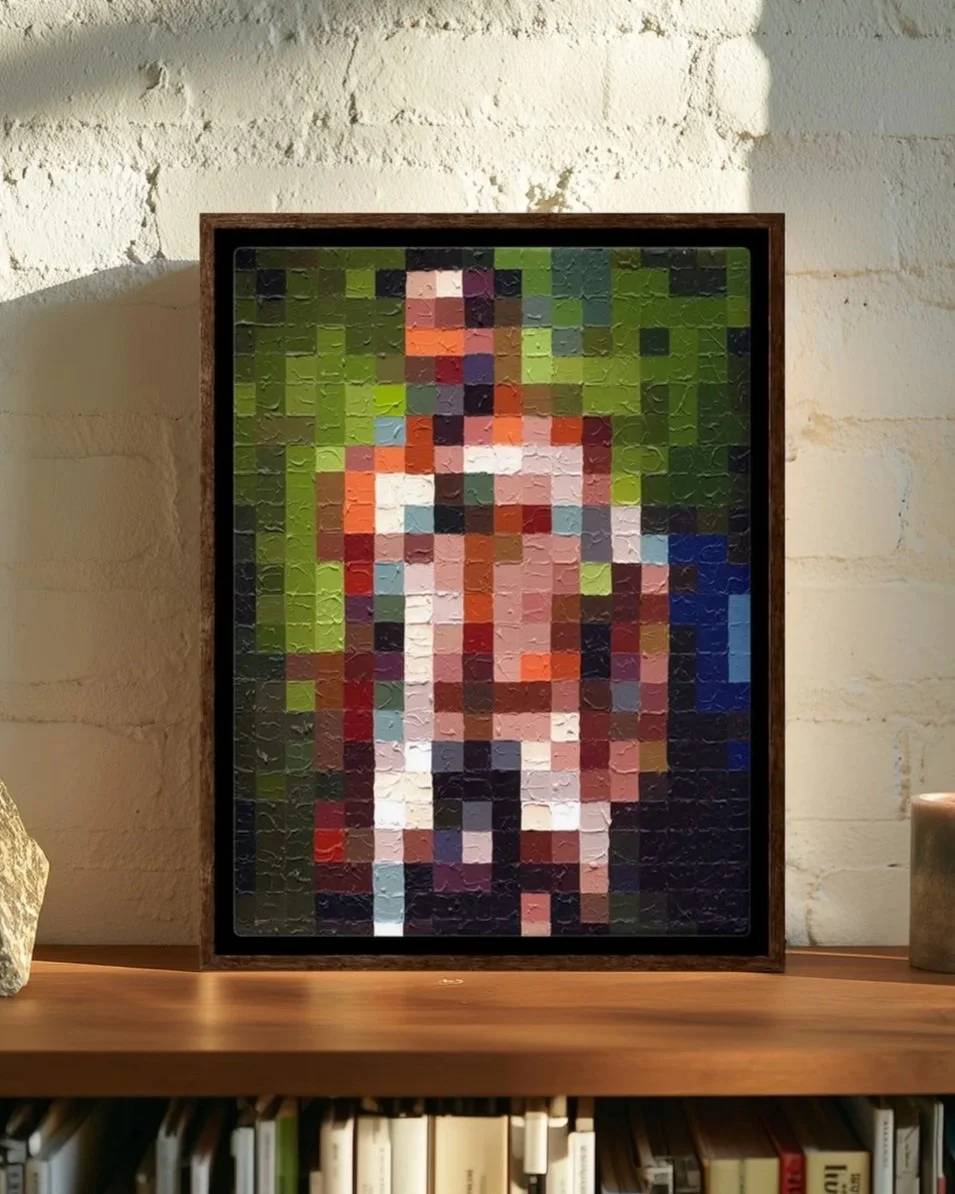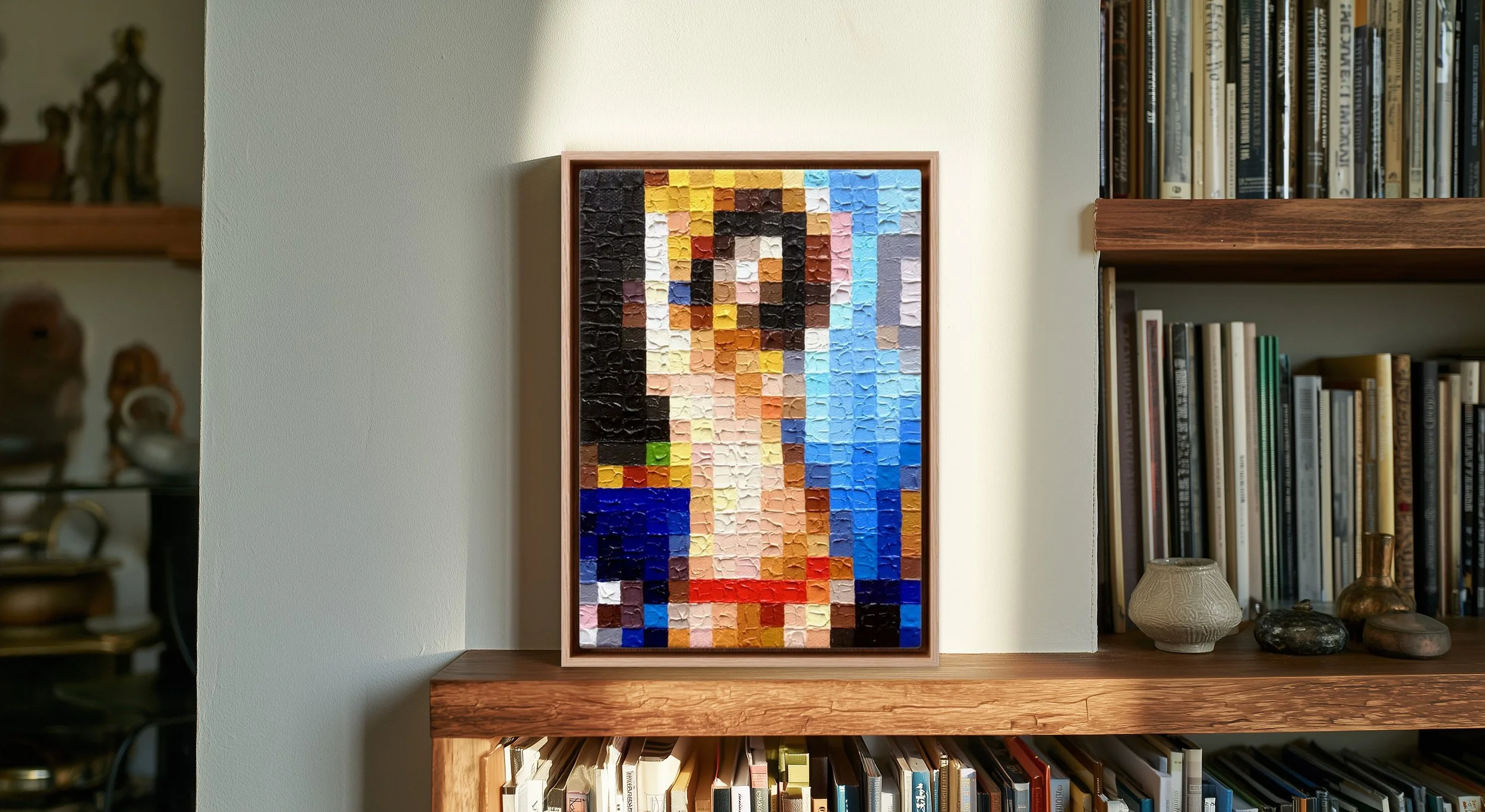


Shortly after I graduated from art school in 1996, I began working in digital publishing. It was the birth of the dot-com boom. My job focused mainly on cutting up website and story design graphics for a major online computer news site.
At the time, dial-up modems were still the primary way that anyone using the internet got online. Transmission speeds were achingly slow, and desktop processing power was so limited that if not for image compression, rendering graphics in a browser was typically a task of minutes, not milliseconds.
Deep in the pixels.
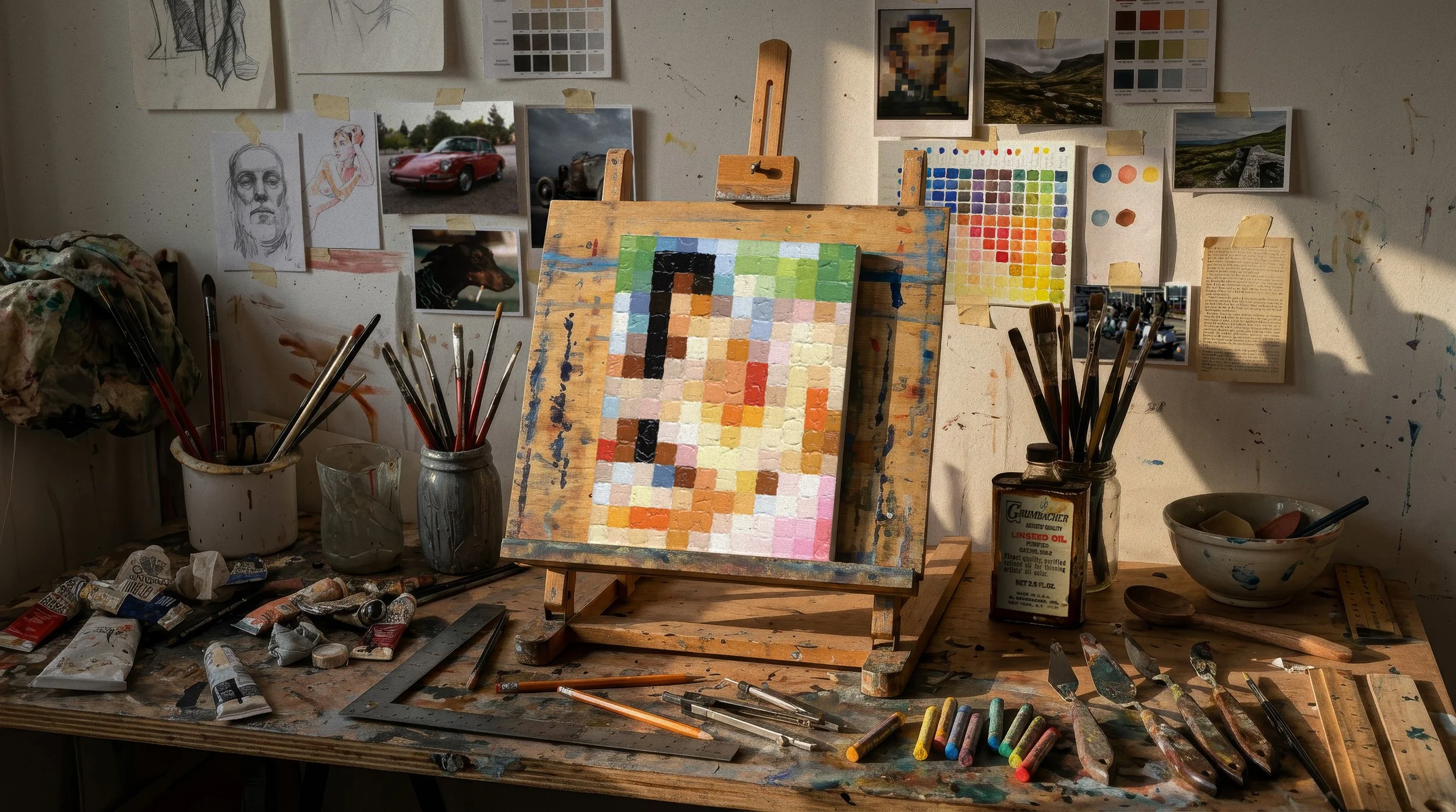
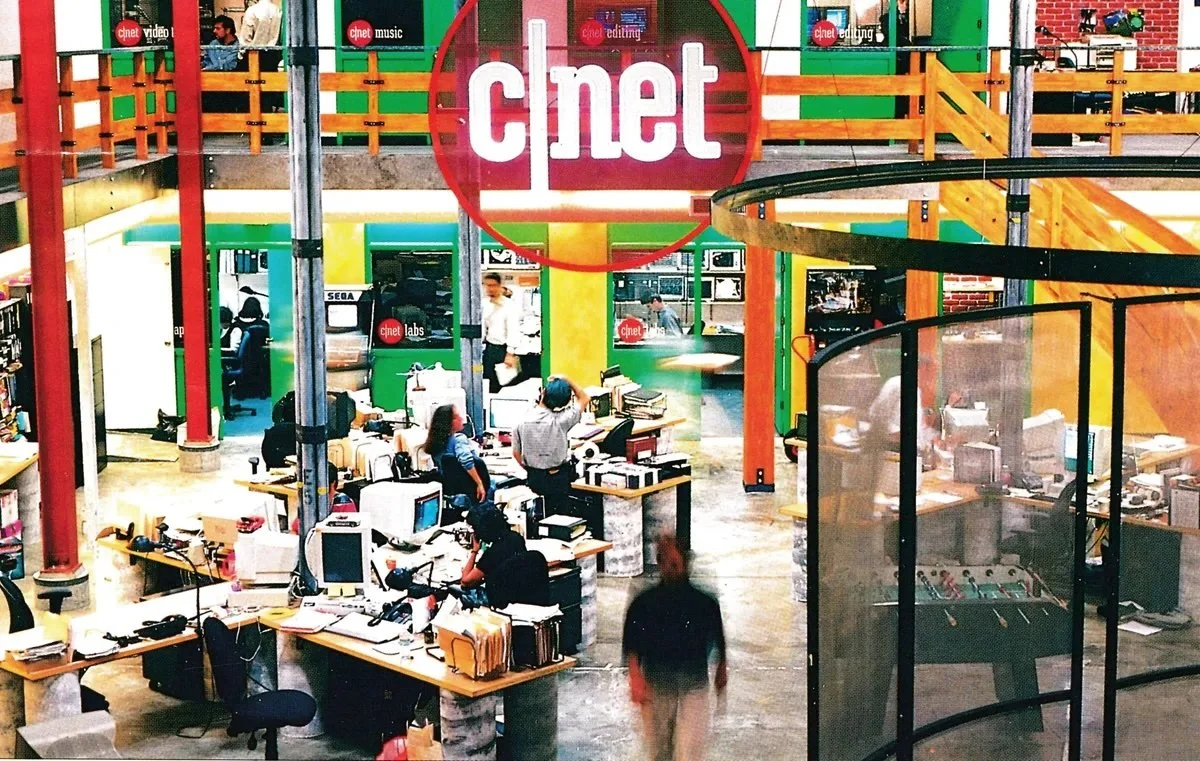
Sitting in the darkened CNET studio, late at night, I worked to compress images and re-color them, imposing a minimal color palette, and pushing pixels around until I had an image that both resolved to the human eye AND was under a specific size and pixel dimension.
I quickly realized that principles of abstract art applied to this ultra-reductive practice — where the brain scans, searches for, and inserts missing or deleted information in order to resolve a picture.
Every major site on the burgeoning Web strove to reduce and compress every kilobyte of information it served, in the interests of keeping page load times low, and user session times high.
That is to say, with the exception of sites serving adult content. Internet porn proved the exception to the rule that image file size must be drastically reduced in order to keep your audience. In fact, the opposite was true - their users were willing to wait many minutes for a high resolution progressive JPG image to load on their screens.
La Grande Odalisque, Jean-Auguste-Dominique Ingres —1814
The Lincoln Effect
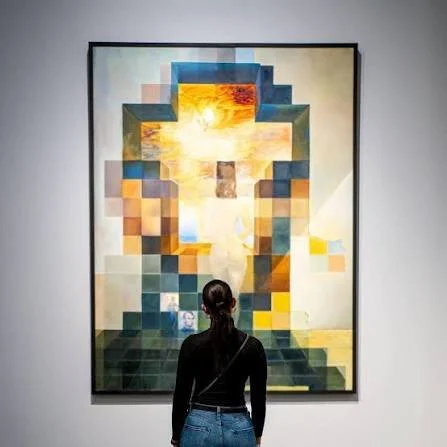
The digital design work I was doing was making my art school brain think of a 1976 painting by Salvador Dali called Gala Contemplating the Mediterranean Sea Which at Twenty Metres Becomes the Portrait of Abraham Lincoln.
This artwork was itself based on an earlier experimental image created by a researcher at Bell Telephone Labs named Leon Harmon.
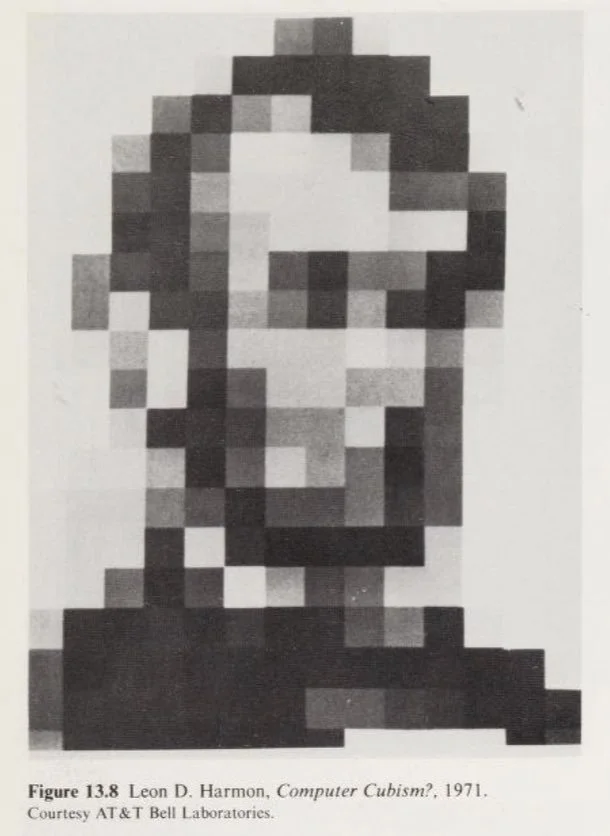
In 1971, Harmon’s work at Bell focused on “computer vision, human perception, and graphics”. Working with Kenneth Knowlton, Harmon developed the first “photomosaics”. The grayscale Lincoln portrait emerged from a technique they developed called “block averaging”, the earliest form of pixellation.
In their work, Knowlton and Harmon had came across the same epiphany that I had sitting at my Macintosh 25 years later—that dramatically reducing the amount of information in an image can paradoxically increase its recognizability.
The image itself must first be fairly well known though, as the portrait of Lincoln was.
The portrait’s missing information was already stored in the audience’s mind.
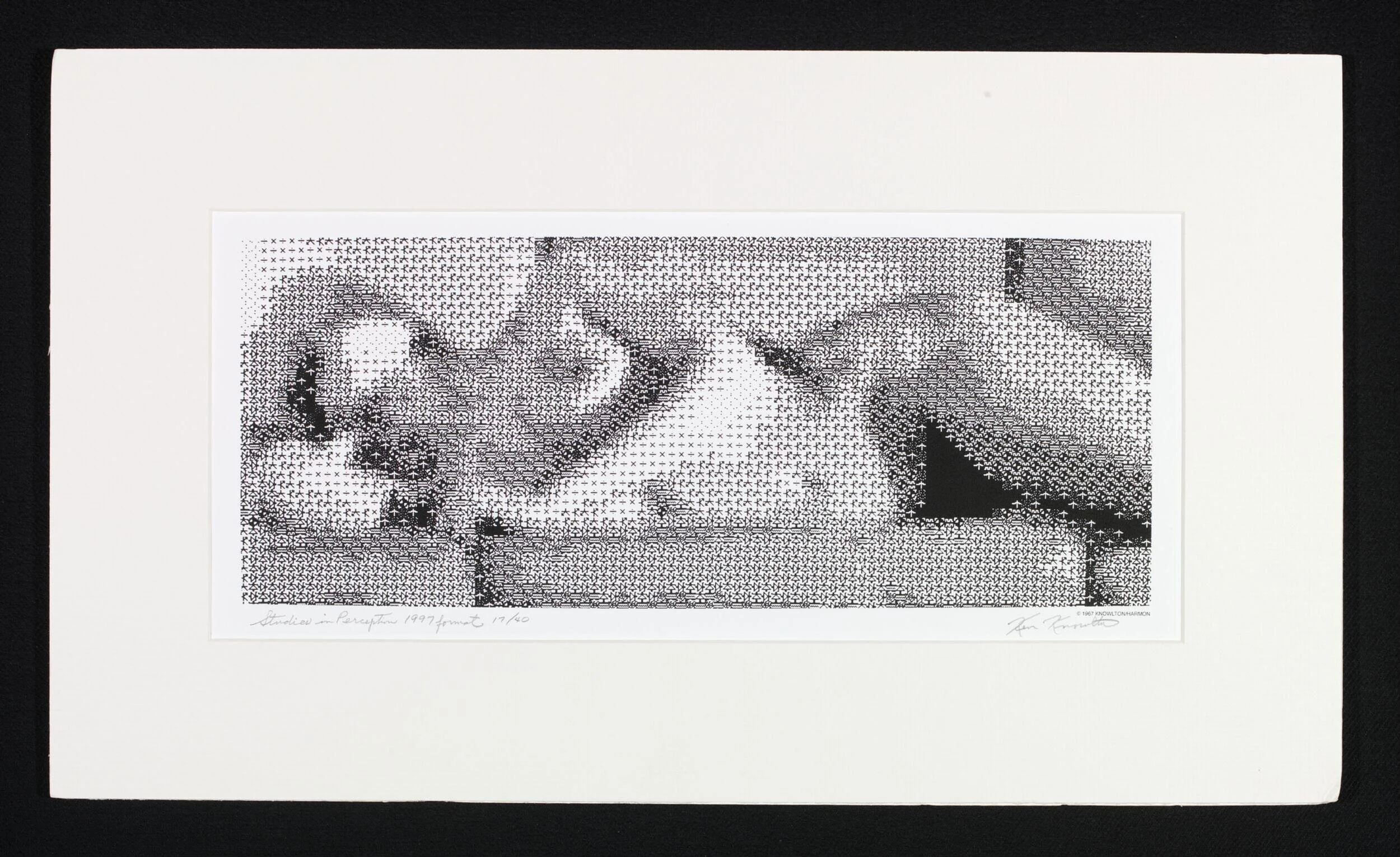
However, their first proof of concept was not the image of the 16th President. It was an image of a reclining nude model — a dancer and choreographer named Deborah Hay.
Hay had been part of a collective of contemporary artists — including Robert Rauschenberg — who had previously collaborated with Bell Labs engineers. They called themselves Experiments in Art and Technology or E.A.T..
Their first collaboration with Bell Labs in 1966 had showcased innovations like television projections, doppler radar, and fiber-optic cameras.
Computer Nude (or Studies in Perception 1), Harmon and Knowlton’s image of Deborah Hay, was created not using pixels, but simple glyph-like symbols to form the image.
As proof of their success, it was then printed on a sheet of paper 12 feet wide, and hung in a colleague’s office as a prank. It also hung in Rauschenberg’s studio, where it was photographed and reproduced in the New York Times.
The technology Harmon and Knowlton developed for Bell ultimately made its way into the first fax machines.
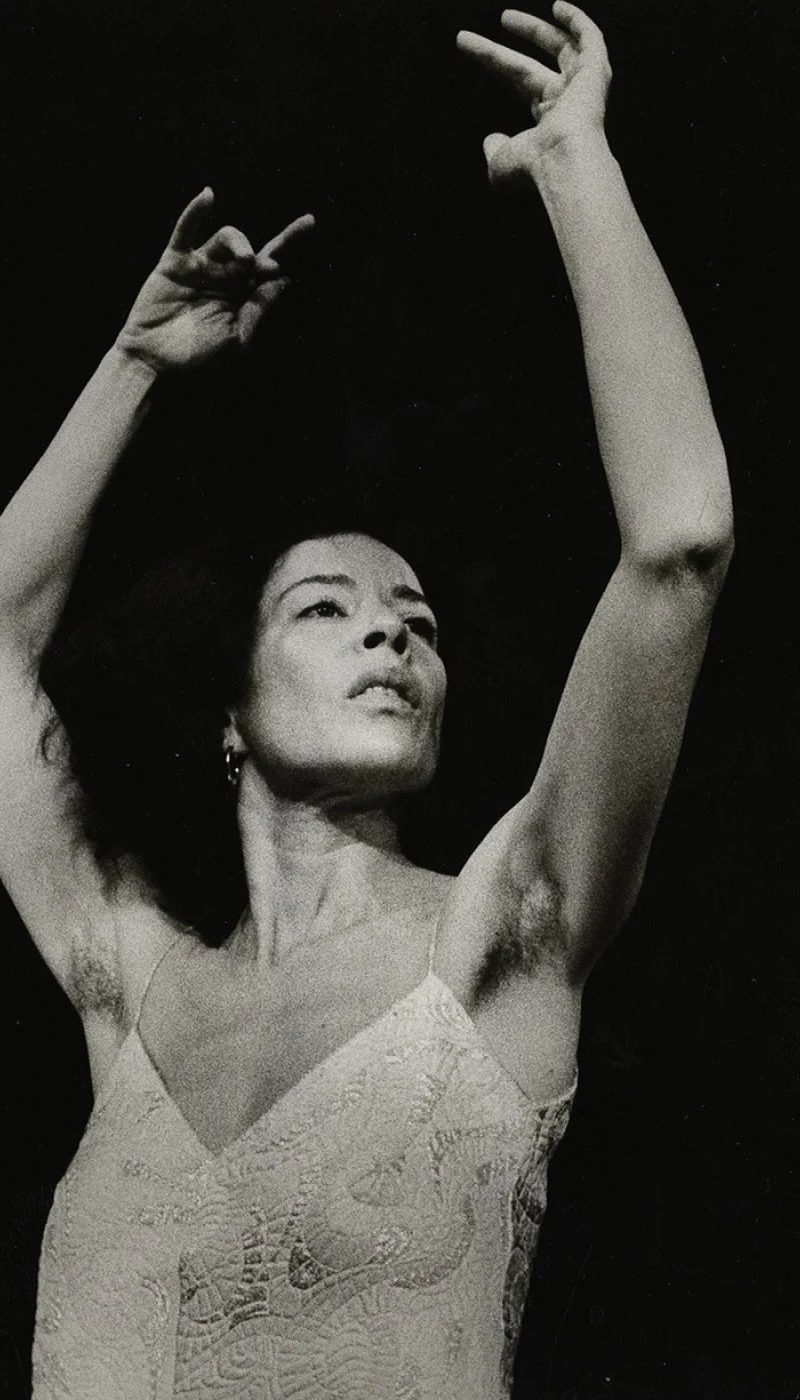
Deborah Hay
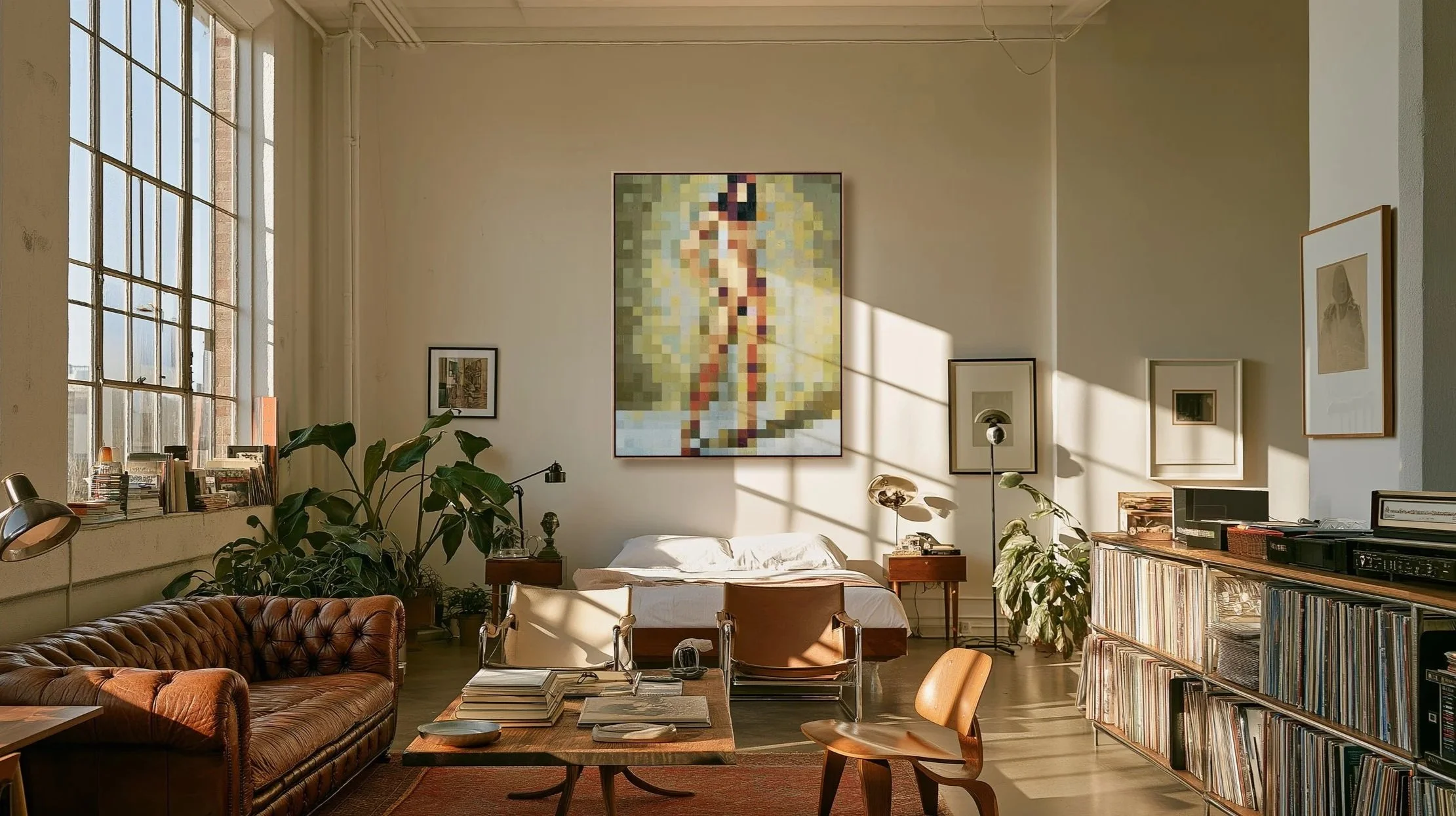
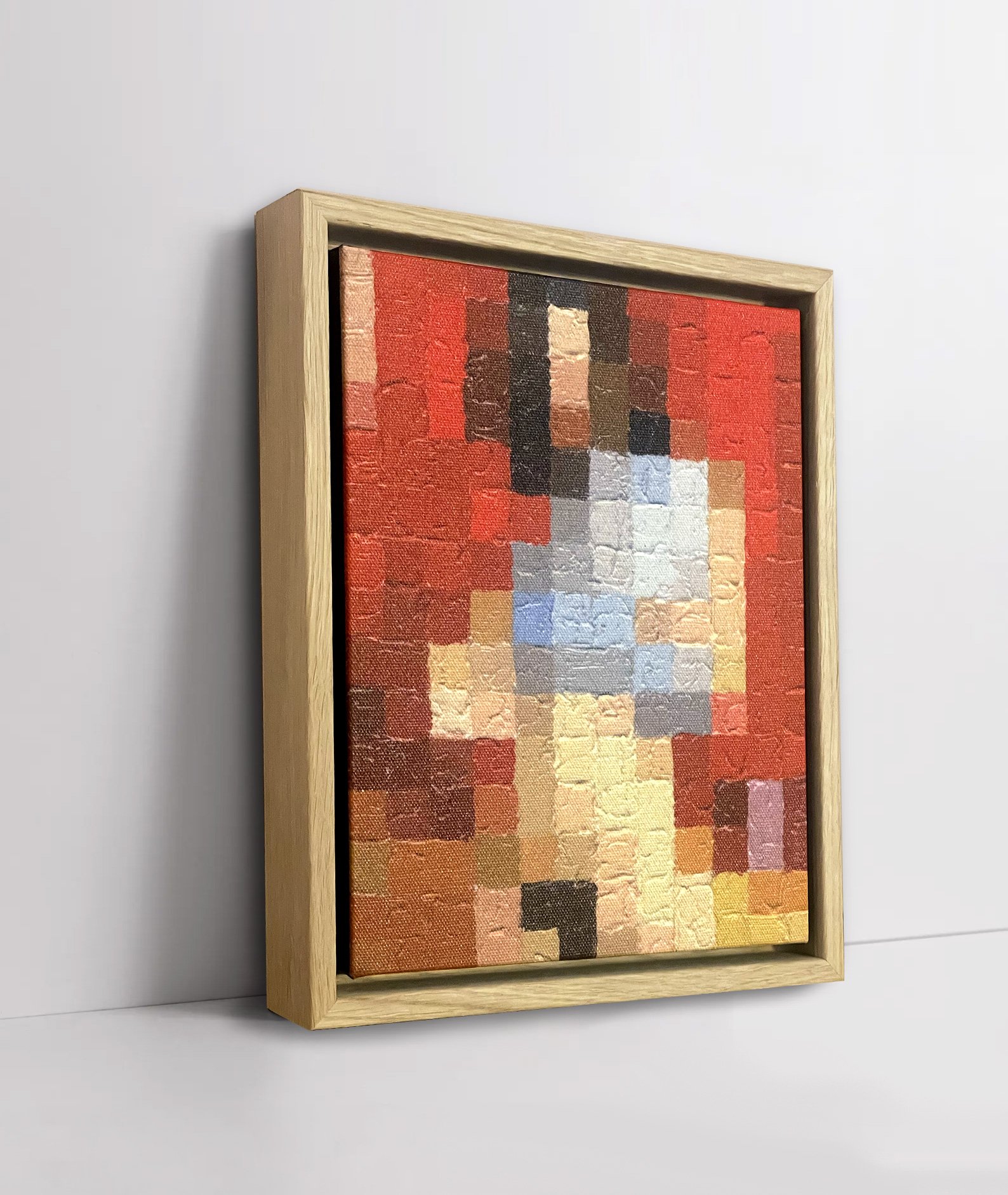
The New Models
The idea of using this technique, sitting at my desk back in 1996, didn’t find its first expression until 5 years later, in 2001.
After contemplating life and death while recovering from a motorcycle crash, I figured if I didn’t take the leap and bring this series of paintings to life, I was doing a disservice to myself.
In that time, bandwidth speeds had improved, processing power had increased, and the appeal of spending time on the internet had broadened to a mainstream audience.
Increased adoption and improvements in video and image technology in the web browsing experience had much to do with the explosion of internet porn in the late nineties too.
Some of the first Web destinations to support streaming video players, robust image databases and high-res photography were adult sites.
The more adult content flourished, the better the technology got, the better the technology got, the more people bought new tech. The more new tech and adult sites appeared, the more people were drawn into the flourishing online porn industry.
New models begat new models begat new models.
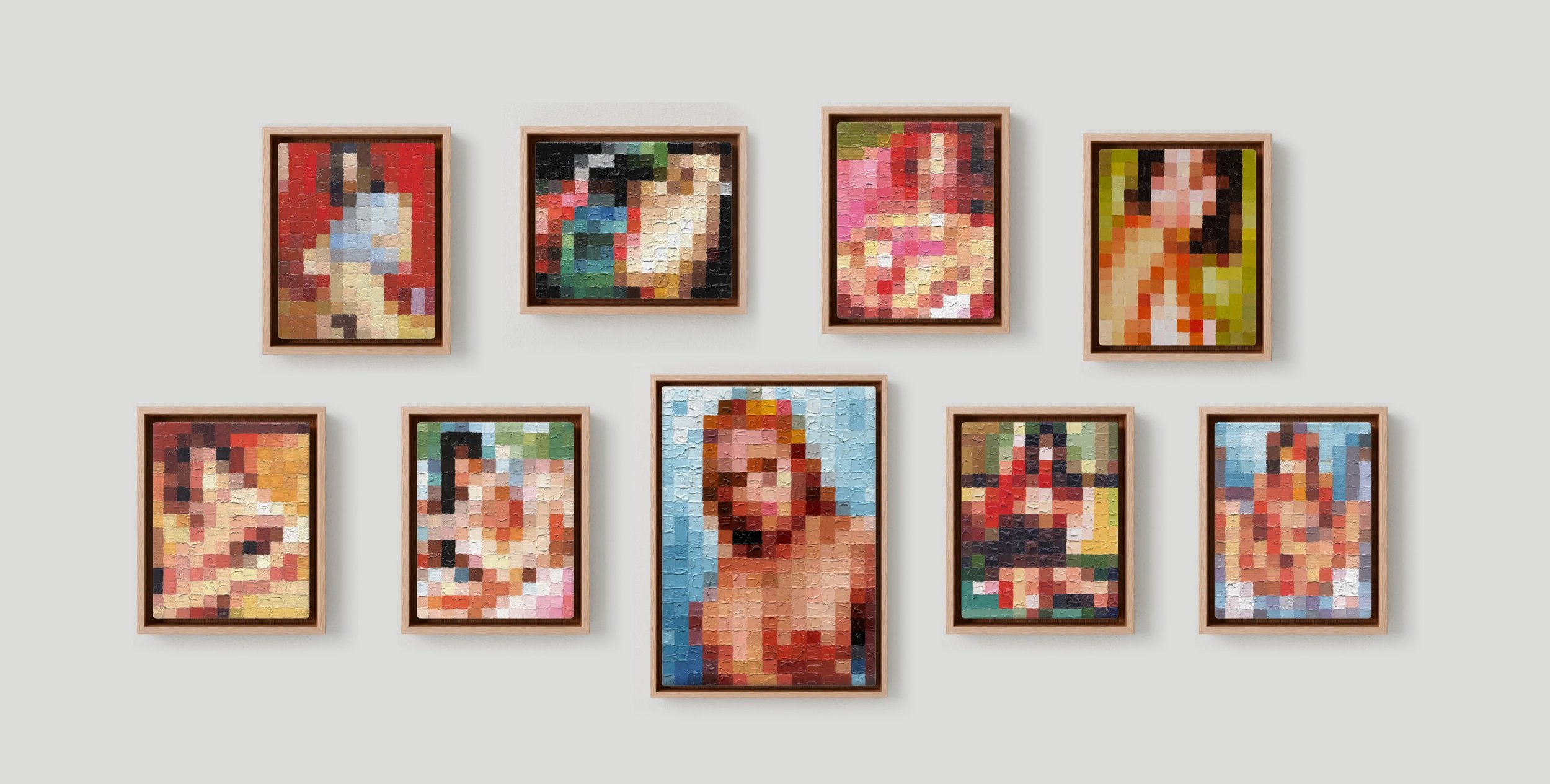
We are all digital now.
When this series was made, 25 years ago, it addressed issues of censorship, privacy, identity, sexuality, and commerce, but also the artistic depiction of sex and the painted nude.
These are issues and tensions that have become even more important today, as sex work, online privacy, online identity, and surveillance aesthetics are shaped by the continuing evolution of digital technology.
That’s why I decided to reproduce these selected works, 25 years on. I think the work still speaks to those issues as much as it did when it was first made.